Research Conducted
Tar spot, caused by Phyllachora maydis, is spreading across Nebraska and can cause serious corn yield loss when cool, humid, and wet canopy conditions persist. Existing research at UNL demonstrated the impact of irrigation on disease development. Improving our understanding of tar spot development in irrigated Nebraska corn fields, while developing an early-warning capability to support initiation of tar spot scouting and eventually fungicide application decisions, could reduce input costs and improve producer profitability. Regional weather stations do not always represent conditions within irrigated corn. University of Nebraska-Lincoln researchers, county Extension educators, students, and cooperating stakeholders installed low-cost cellular sensors in rainfed and center-pivot fields near Kearney, Aurora, Seward, and Mead during the first year of the project. Sensors record canopy air temperature, relative humidity, leaf temperature, and leaf wetness, with data transmitted to an online dashboard. These measurements are paired with field scouting and colocated research-grade instruments to evaluate sensor performance to characterize the environmental conditions associated with tar spot development.
Findings
The project produced a working cellular sensor network, secure public website, live site map, research dashboard, and downloadable field records. In a complete post-radiation-shield comparison at Kearney on July 9, low-cost and higher-end sensors followed nearly identical daily patterns. Hourly temperature correlations were 0.991-0.996, with mean absolute differences of 0.34-0.68 °C. Relative-humidity correlations were 0.972-0.986, with mean absolute differences of 3.09-3.95 percentage points. Field humidity differed from nearby regional weather by about 7.3-7.7 percentage points on average and by as much as 16.6-19.6 points during individual hours. These preliminary results support using distributed low-cost sensors to characterize canopy microclimate, while recognizing that leaf-wetness devices use different response scales and still require calibration and disease-response validation.
Impact
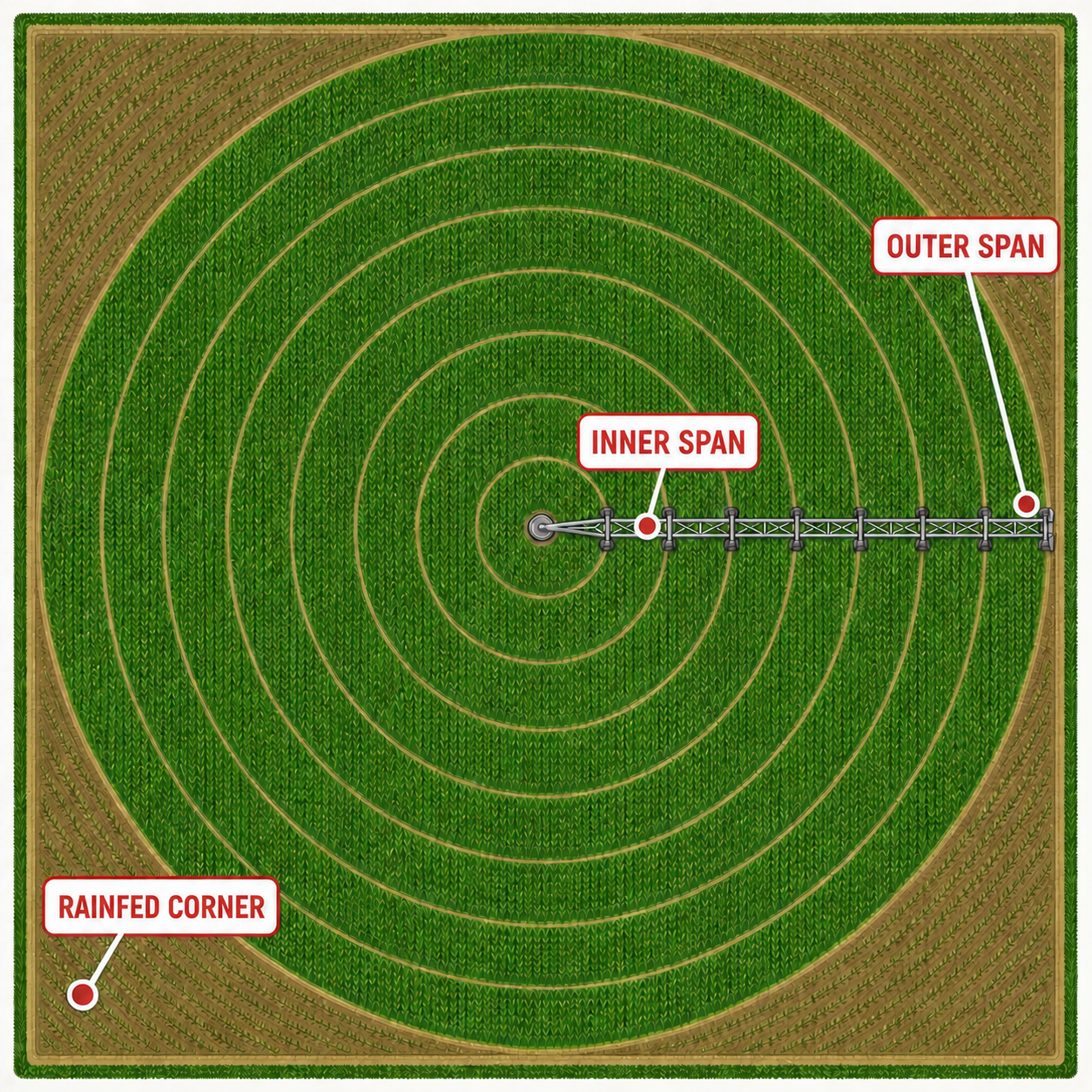
Nebraska corn growers need timely information from the environment where disease develops: inside the crop canopy. A nearby station or mobile weather forecast may miss irrigation-driven humidity, cooler canopy temperatures, and extended leaf wetness. A reliable network of low-cost sensors could provide field-relevant risk information across far more locations than research-grade weather stations alone. This is especially important in Nebraska, where approximately 7 million corn acres are irrigated by center pivots and overhead irrigation can create favorable disease conditions. Collecting continuous, large-scale microclimate data across diverse environmental conditions in Nebraska will improve our understanding of tar spot development and help confirm thresholds for future disease alerts. While statewide yield and economic impacts remain to be quantified, the project establishes the infrastructure needed to improve scouting timing, strengthen fungicide decisions, reduce unnecessary applications, and protect yield when tar spot risk is high.
Future Objectives
Continue collecting microclimate, irrigation, crop growth stage, and disease-scouting records across Nebraska field sites. Compare low-cost sensors with research-grade instruments over additional weather events and growing stages, and refine calibration where needed. Link temperature, relative humidity, wetness duration, and growth stage with observed tar spot onset and severity to confirm Nebraska-specific risk thresholds. Together with other UNL corn disease research and extension efforts, our longer-term goal is to contribute to a validated, dynamic, and cost-effective alert network that reports favorable conditions and local disease activity to growers and Extension personnel to complement field scouting and established management recommendations.
 Supported by the Nebraska Corn Board